

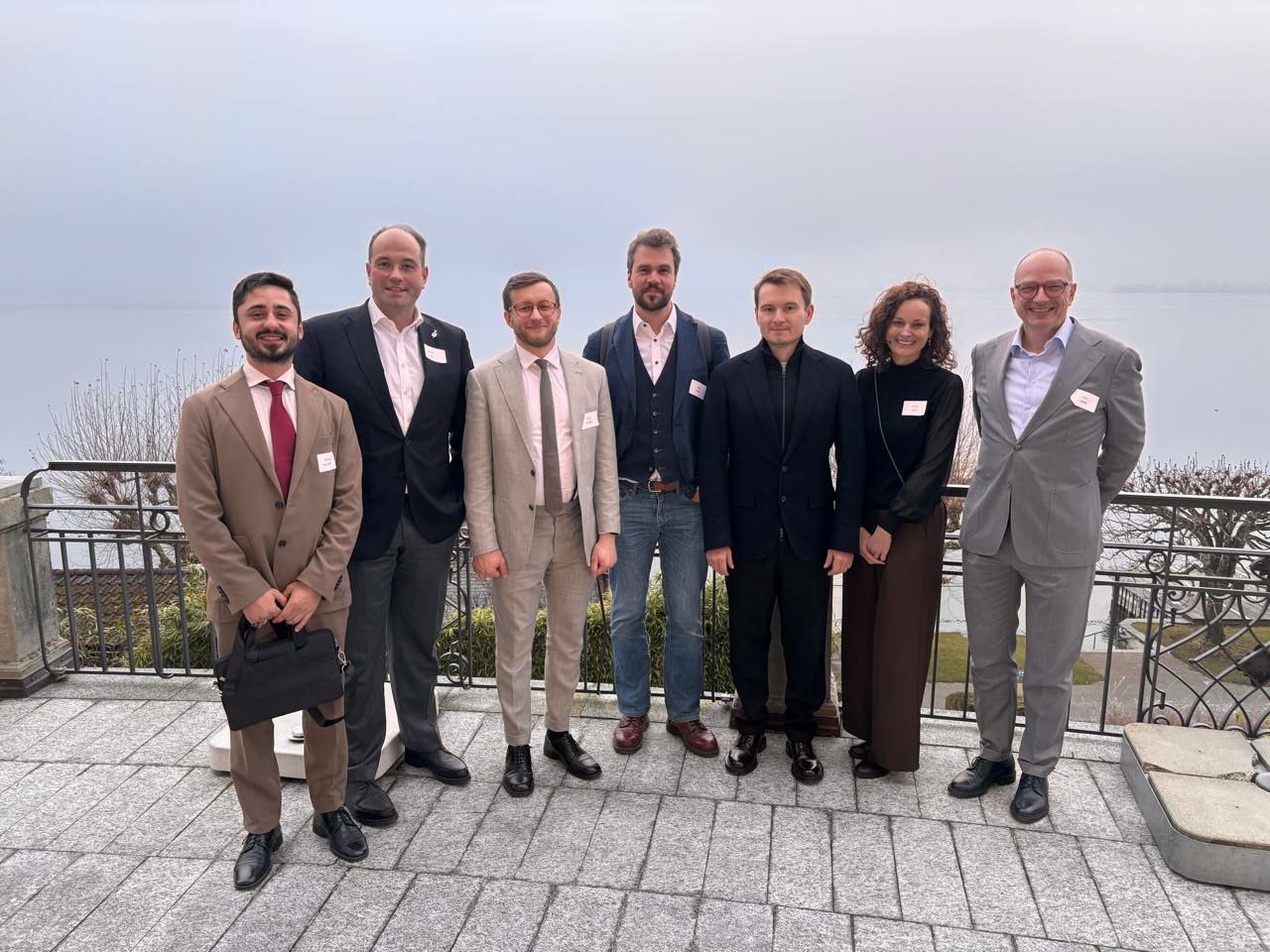
The recent launch of the Zug Institute for Blockchain Research (ZIBR) offered a useful signal of where the blockchain conversation is heading. What stood out was not a new protocol, a novel scaling approach, or another application layer, but a broader shift in framing.
Blockchain is no longer primarily a technology story. It is increasingly a societal one.
As Mihai Alisie, Ethereum’s co-founder, put it in his keynote, we are moving toward an emerging autonomous society. That framing captures a transition already underway: decentralisation is no longer about experimenting with infrastructure, but about rethinking how institutions, governance, and trust are organised.
Seen through this lens, decentralisation is taking us:
- from infrastructure to institutions
- from innovation to governance
- from experimentation to societal design

This shift was echoed clearly by Heinz Tännler, Finance Director of the Canton of Zug, who explained that the decision to fund and support ZIBR was not about accelerating adoption for its own sake. It was about shaping how society evolves around these technologies.
That distinction matters.
The real challenge is no longer whether decentralised systems can work technically, but whether they can be translated into trusted public infrastructure, sustainable governance models, and institutional frameworks that endure beyond early adopters and market cycles.
This is also where Switzerland has a unique historical role to play. The country has long been a place where regulatory innovation, institutional pragmatism, and technological experimentation intersect. The ability to export not just technology, but regulatory intelligence and societal frameworks, is precisely where Swiss leadership can scale beyond its borders.

This is also the layer where we operate at the European Decentralisation Institute (EDI). EDI works at the intersection of public policy, governance, and institutional design.
Our scope is pan-European – not limited to the EU – while remaining deeply connected to EU policy processes and decision-makers. Our objective is not to promote decentralisation as an ideology, but to make it a strategic pillar of Europe’s digital economy and society.
The rationale is straightforward. As outlined in our first policy brief, decentralisation has moved beyond being an innovation trend. It is increasingly a structural layer for digital sovereignty, supporting resilience, autonomy, and long-term stability in a fragmented geopolitical and technological landscape.
This perspective shapes our 2026 research agenda, which follows a clear progression from foundational infrastructure to system-level governance:
- Q1: Digital Identity (in collaboration with ENS DAO)
- Q2: Decentralised and compliant finance ((in collaboration with AFME.eu)
- Q3: Resilient energy systems (in collaboration with EU DG ENER)
- Q4: Autonomous AI (open call to collaborations)
The technology is largely ready.
The institutions are beginning to catch up.
The next phase of decentralisation will not be driven by code alone, but by deliberate choices about how societies organise power, trust, and infrastructure in an increasingly complex world.
That next chapter will be written not only in repositories and protocols – but in policy rooms, regulatory frameworks, and institutional design.
From Zug, to Europe, and beyond.

